Part 1
The Man Who Taught Me to See
Before I tell you anything about AI, I want to tell you about a man who used to sit at the kitchen table on Saturday afternoons and take apart a computer — piece by piece, component by component — and clean every part with a cotton swab.
Not because it was broken. Because he loved understanding how it worked.
My father, Marcos Welsh Carboni, spent 29 years as a technology leader inside the Tribunal de Contas do Município de São Paulo — the institution responsible for financial accountability for one of the largest cities in the Western Hemisphere.
He was recruited by Dr. Paulo Planet, the tribunal's president at the time, to build something that didn't exist yet: the technology department itself. Before my father, there was no department. No infrastructure. No computing sector of any kind. He walked in and built it from nothing — networks, cybersecurity, the whole digital foundation. He became the tribunal's first Head of Networks and Support. Effectively, its first CTO. He joined in 1992, at the exact moment government IT in Brazil was being invented. He did not inherit a system. He helped build one from nothing.
"Look at these pieces. Look how intricate it is."— Marcos Welsh Carboni
He also used technology to lift people out of poverty. When computers were too expensive for most families in Brazil, he taught his friends how to build them from spare parts — so they could sell them, earn money, and feed their families. One of those friends is still grateful today.
People ask me why technology feels so natural to me. Why I pick things up fast. Why I'm not afraid of tools I've never touched. The answer is him.
He didn't sit me down and teach me. He just lived it — openly, joyfully, in front of me — and it became who I am. The curiosity is his. The patience is his. The belief that any system can be understood if you look closely enough at the pieces — that is completely, entirely his. I just applied it to a different era.
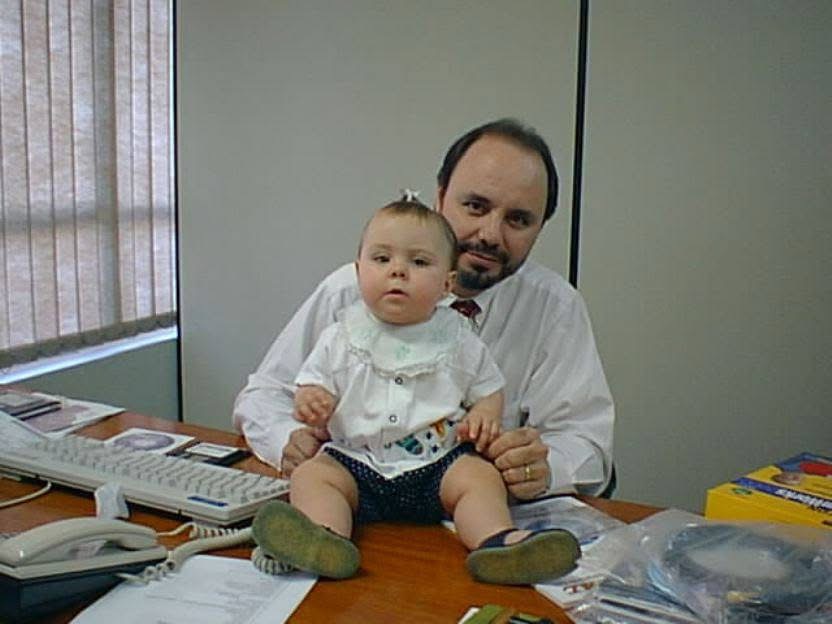
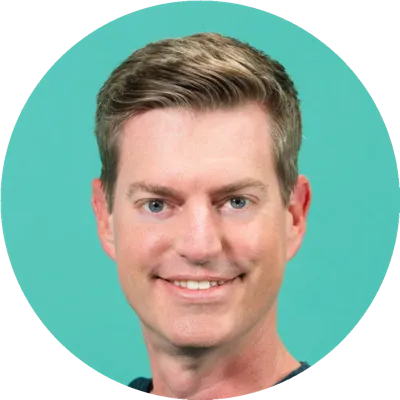
Marcos Welsh Carboni at his desk — São Paulo, early 1990s
Part 2
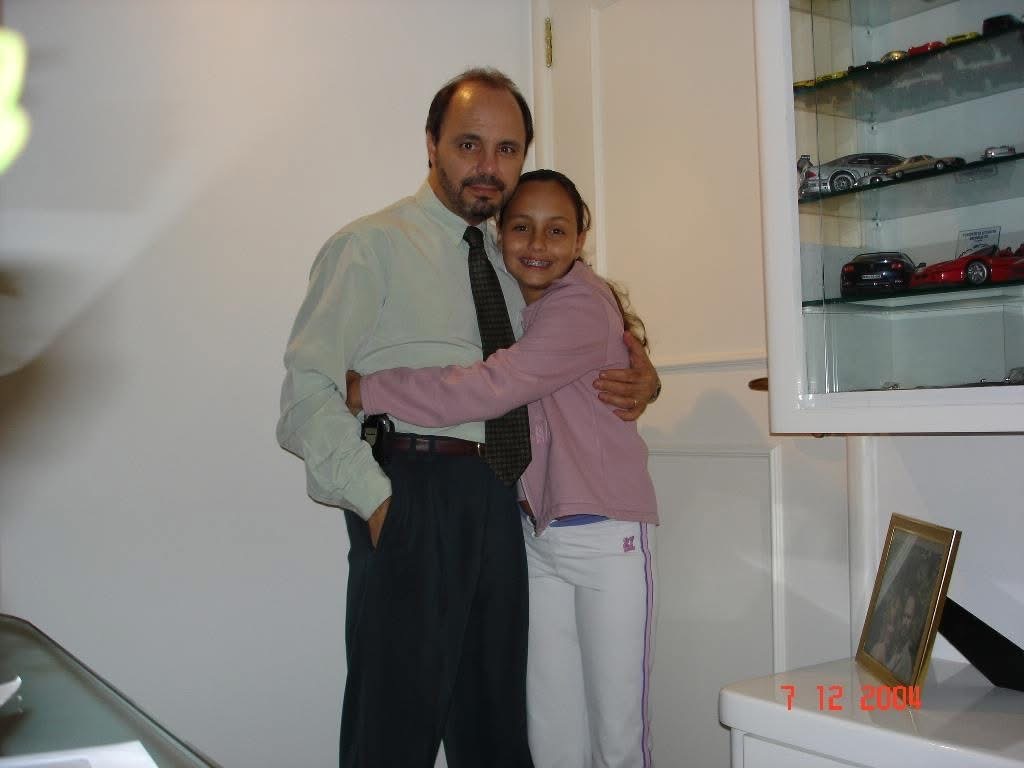
Danielle and Marcos at home — São Paulo, circa 2000
My First System Debug (age 10)
"When I was a child, my father punished me by unplugging every cable from the computer before he left for work. I was obsessed with it. Neglecting my homework. Staying on for hours. He saw himself in me — and it terrified him."
So before he left each morning, he would unplug every cable. Remove all access. I would come home from school, sit down in front of the machine, and figure out how to plug it all back in. Cable by cable. Trial and error. And then — before he got home — I would unplug everything again so he wouldn't know I had figured it out.
I did this every single day. Until the housekeeper told him.
My average dropped to 88 because I kept choosing the computer over homework. My father — the software engineer who built my technology obsession in the first place — punished me for it. He saw himself in me and it scared him. He was right to worry. I was right to keep choosing. Both things were true.
In my first year of high school, there was an elective. Everyone else picked the obvious choices. I picked robotics. One of maybe three kids in the whole grade. We built things that moved because of code I wrote. It was the first time I understood: I'm not just a user of systems. I'm a builder of them.
That was my first experience debugging a system I didn't understand. I've never stopped.
The method I use today—with AI systems, agent pipelines, and multi-agent architectures—is the same method I taught myself at ten years old in my room in São Paulo. Never giving up. Focused. Methodical. Patient. Not afraid of what's broken. Certain that if you try everything, something will work. And if something breaks, we will fix it—there is always a solution to every problem.
Part 3
The Years That Made Me
I lost my mother when I was 15. My sister was seven. At the time, my dad asked me to help be her mom—and I did. I became, in many ways, her little mom—holding someone else together while I was still falling apart. Responsibility at that age shapes everything. For many years after she passed, I couldn't hear the word "mom" without shutting down. I put the pain under the carpet. I kept moving. That was the only thing I knew how to do.
My dad always documented everything. Again, because he was always obsessed with technology—he bought the first cameras, the latest ones, and captured everything. I thank him for that.
After my mother passed, something else started in me. I began documenting everything—not intentionally, not strategically, but because I was terrified of losing more. I have posted to Instagram almost every day since 2011. Fifteen years of my life, recorded publicly.
When AI arrived and my mentor told me I'd be easy to clone because of how much I'd recorded, I said: "I know. That's actually the point."
In my early twenties, something happened at work in Brazil that broke everything open again. I was sexually harassed. Almost worse. I got out. And I got out with a clarity I had never had before: where I was, in the way it treated women, was not where I wanted to build my life.
That's when I left.
Part 4
San Diego, Alone
I came to San Diego to study. Business management. That was the plan.
What actually happened was bigger. It was the first time I had ever lived completely alone — in a country where no one knew me, with no audience to perform for, no expectations to meet. And in that total aloneness, I finally got to ask: Who am I, when no one is watching? What do I love? What am I actually made of?
I found out I was made of a lot.
Part 5
What I Built
In 2019, I co-founded PowerFuel Damas, the first social enterprise for-profit that includes a global marketing agency and an international community to empower women. We specialize in B2B and B2C segments—identifying market trends and customer needs, and developing highly targeted and engaging marketing campaigns.
Since 2019. Co-CEO. Teams in three countries. I built or implemented every AI system we run. I know what it costs to build something from nothing: how to hire, how to lead, how to survive COVID, how to grow a business.
PowerFuel Damas. From San Diego. From nothing. 26 countries. United Nations WEPs recognition. Google and Meta partnerships. A marketing agency that expanded globally.
When AI arrived, I didn't discover it—I recognized it. The way you recognize something you were raised to see. My father spent my entire childhood teaching me how systems work—inside, out, piece by piece. When AI appeared, I didn't see a new tool. I saw a new system. I already knew what to do. I was so excited by the power of this technology—fascinated.
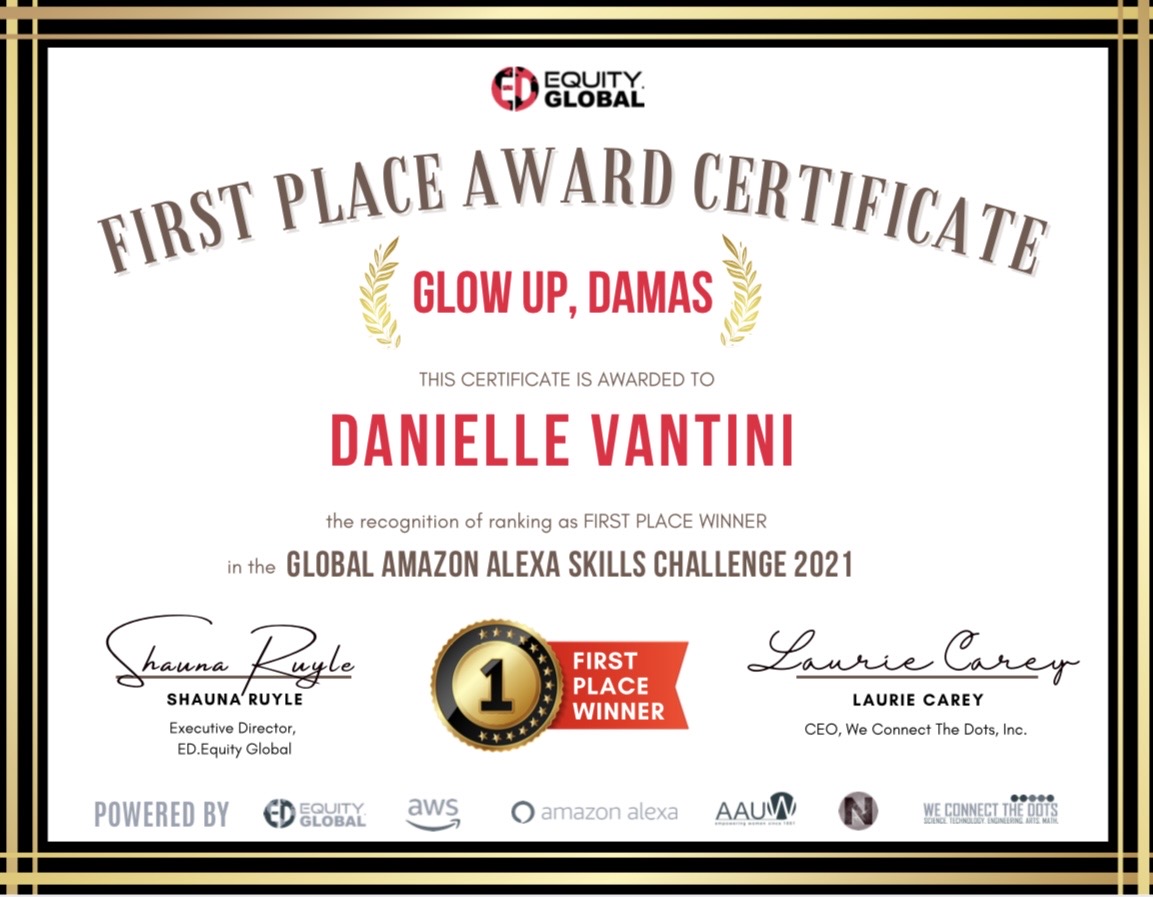
In 2021, I enrolled in five weeks of AWS and Amazon Alexa cloud training—25 hours of cloud infrastructure and voice AI development. After completing the course, I entered the Amazon Alexa Skills Challenge, where the goal was to develop an Alexa app that supported one of the United Nations Sustainable Development Goals. I built Glow Up Damas: a voice AI mental health and safety app for women experiencing domestic violence, with a secret emergency escape built into the conversation.
What most people don't know: to build the app's intelligence, I manually mapped every possible conversation branch by hand — every question, every response, every path the AI could take. A massive decision tree. That is exactly what large language models like ChatGPT now do automatically. We built it by hand in 2021 because the tools didn't exist yet.
I am not a developer. I am a builder. There is a difference — and it matters.
I placed first. Globally. There were over 300 people enrolled in the training, and only 46 participants—from countries all over the world—competed. I was a business founder with no engineering background.
In 2026, I stepped into the CTO role at the agency. Not because someone gave it to me. Because I have been the one implementing the technology all along — and it's not slowing down.
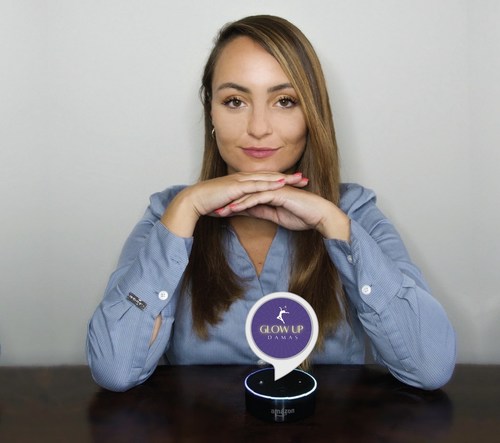
April 2021 — 1st Place, Global Amazon Alexa Skills Challenge
Part 6
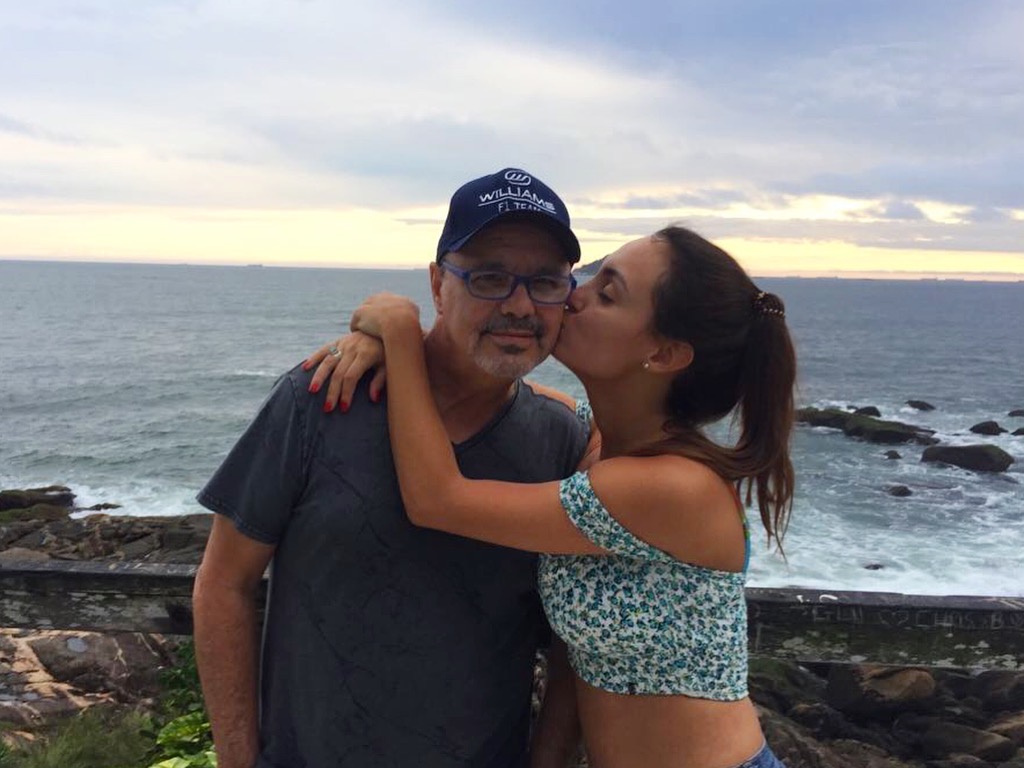
Danielle and Marcos — Brazil
The Year I Lost Him
In 2021, my father passed away. COVID. Borders locked. I did not have my green card yet — if I left the United States, I would lose everything: my visa, my business, the life I had built from scratch in a country that was not my own.
So I stayed. And I grieved from across an ocean.
Someone looked me in the face and said: "Don't you think you're very selfish that you didn't come back?" They saw me continuing to build, continuing to show up, continuing to fight — and they did not understand.
My answer, then and now: Aren't you glad I'm trying to be happy? I'm fighting for it here.
When he passed, I opened his boxes. Inside: every phone he had ever owned — still in the original packaging. Every game console since the beginning. Gameboy. All of it. Preserved with the care of someone who understood that each device was a marker of a moment when the world changed.
He never saw what came next. But he built the person who did.
Everything I launch with technology, every person I teach about it, every AI system I build — is how I make him proud.
If anyone can build a computer wherever he is — it's him.
The loop closes
Different tools.
Same mission.
I won the Alexa competition on April 22, 2021. He passed that same year. I couldn't be there. For five years, I kept building — with the urgency of someone who knows what it costs to not be where you need to be.
On April 22, 2026 — five years to the day — this brand launches publicly. That date is not a coincidence. It is a completion. Not a tribute to him. A continuation of what he started.
"My father built computers from spare parts in Brazil so his friends could afford them and feed their families. I use AI to give non-technical people access to power that was never meant for them. This is not a business. This is a continuation."
He was first generation in government IT in Brazil. He built systems from nothing, for people who had nothing, so they could do more.
I am first generation in non-technical AI leadership. I am building AI systems from nothing, for people who have been told this technology is not for them, so they can do more.
He didn't pivot to technology. He was built for it.
She didn't pivot to AI. She was built for it.