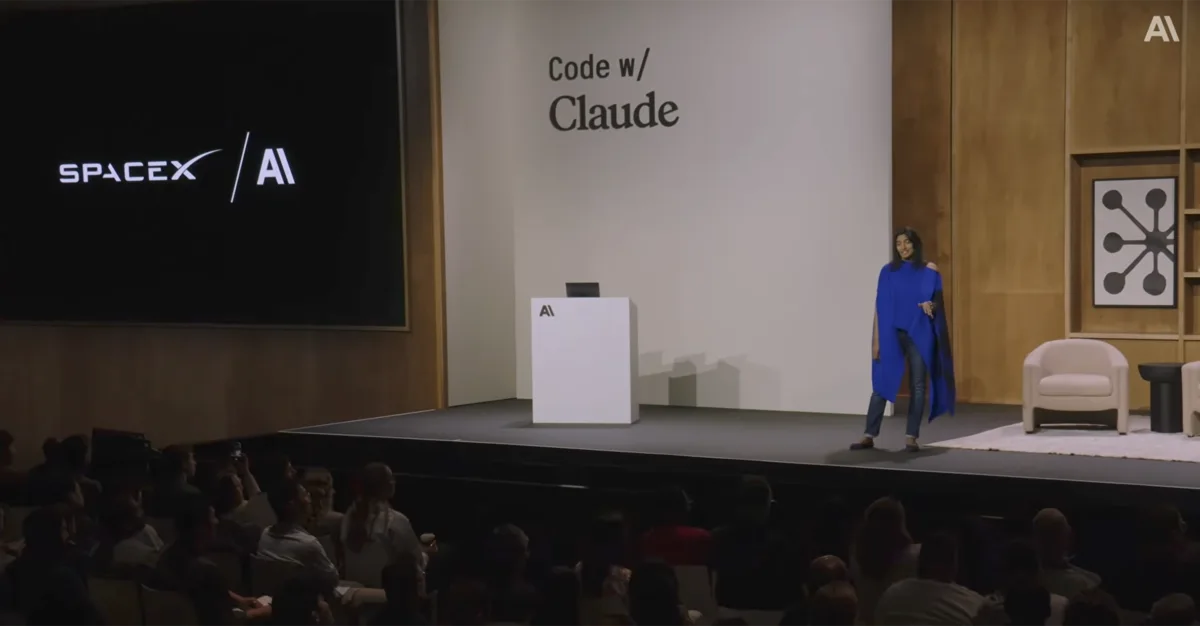
At Anthropic's Code with Claude 2026 on May 6 in San Francisco, Chief Product Officer Ami Vora opened by naming the defining gap of this moment: AI capability is growing exponentially while business adoption grows linearly. For non-technical business owners, that gap is not a threat — it is the competitive window.
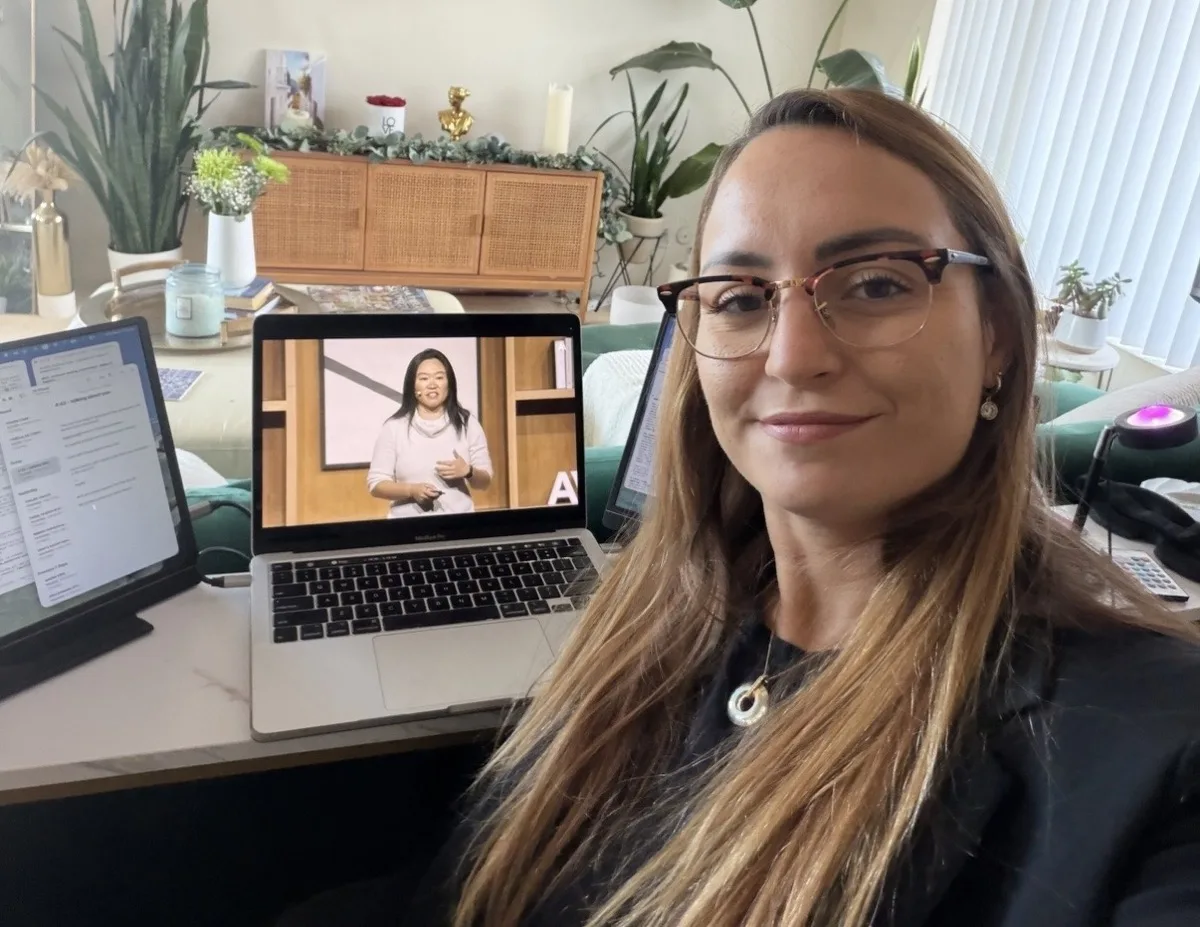
I attended Code with Claude 2026 on May 6 — virtually, from San Diego. Ami Vora, Anthropic's Chief Product Officer, opened the main stage by drawing a single distinction that reframed everything that followed.
AI capability is growing exponentially. Business adoption is growing linearly. The gap between those two lines is not a crisis. It is a window. And it is open right now.
Here is what was announced, and what it means if you run a business.
Is the Gap Bigger Than You Think? Yes — and That Is Good News
Stand back for a moment and look at the last three years of AI progress.
Two years ago, the frontier was a model that could write a decent email. That felt impressive. A year ago, Anthropic was on a stage talking about an agent that could run for an hour without a human checking in — and the room treated it like a stretch goal.
Six months after that, agents were running overnight. Engineers were waking up to finished work.
Then last month, something happened that most people still have not heard about. A model called Mythos read the entire OpenBSD source tree — millions of lines of code — and found a 27-year-old vulnerability. Not a new one. One that had survived every human reviewer, every automated fuzzer, every static analyzer thrown at it for nearly three decades. Found in one pass.
The jumps keep getting bigger. The intervals keep getting shorter.
And yet, most organizations are still using artificial intelligence as a better search engine. A faster spell-checker. A summarizer for their emails. That is the gap Ami Vora described. That gap is where the next wave of competitive advantage lives.
"AI capabilities are compounding every year while business adoption is moving linearly. The gap between these two lines — that's the opportunity."
— Ami Vora, CPO, Anthropic, Code with Claude 2026The organizations that move to close it first will define the next five years in their industries. The ones that don't will spend those five years catching up.
This is not a developer story. This is a business story.
What Do the Numbers Tell Us?
Before the keynote got into capabilities, Ami Vora shared two numbers that set the context for everything else.
API volume on the Claude platform is up nearly 17X year-over-year. Not 17%. Seventeen times. The average developer is now spending 20 hours per week inside Claude Code — that is half a working week, inside one tool.
Those numbers are not about productivity gains. They are about what happens when a tool becomes infrastructure. When developers spend half their working time in something, they build their workflows around it. They stop thinking of it as a tool. It becomes the operating environment.
For non-technical business owners, this matters because the developers building your internal tools, your product, your digital infrastructure — they are already there. The question is whether the people running the business understand what they are now capable of.
What Can Claude Actually Do Now? Three Capabilities That Shift the Model
The keynote introduced three new platform capabilities built around a consistent idea: AI that improves itself, coordinates across teams, and pursues outcomes instead of following instructions.
Dreaming. Claude can now review its own past sessions autonomously. It identifies what it missed, what worked, and what to do differently — then writes those learnings to memory without being told to. No human intervention. No retraining. The system gets better overnight.
The demo made this concrete. A fictional aerospace startup — Lomara — had three Claude agents working in coordination: a commander, a detector, and a navigator. Their job: simulate drone landings on the moon. The team ran a simulation. Results were good but not perfect. They pressed one button — the "dream" function — and let Claude review the previous run overnight. The next simulation scored higher. Not because anyone changed the model. Because the model reviewed its own work and adjusted.
That is what self-improving artificial intelligence looks like at the operational level. Not theoretical. Running in a live demo on a main stage.
Multi-agent orchestration. Fleets of Claude agents can now work in coordination on complex tasks, each with its own independent context window. This is not one AI doing many things. It is many AIs doing one thing together — the same way a team of specialists does better work than one generalist working alone.
Outcomes rubric. You define what success looks like in a plain-text file. Claude iterates until it hits that standard. Not "follow these steps." Not "do this task." "Here is what done looks like — figure out how to get there." That shift — from instruction-following to outcome-chasing — is the one that changes the operator's role.
What Is Mercado Libre Actually Doing With This?
The headline number is 23,000 engineers. That is the scale of Mercado Libre's technology organization, and every one of them is currently using Claude Code, according to technology lead Oscar Mullen at Code with Claude 2026.
Their stated goal: 90% autonomous coding and a fully agent-driven pull request loop by Q3 2026. That is not a pilot. It is not a proof of concept. It is a company reorganizing around what artificial intelligence can do at scale — and doing it now, not in two years.
One detail from the keynote deserves more attention than the headline number. Managers and VPs are writing code again. Claude Code returned coding to people who had spent the last decade removed from the actual work — in meetings, on roadmaps, approving things. The tool did not replace them. It gave them their craft back.
That pattern — AI returning capability to people who had been pushed away from it — shows up differently in every industry. But the direction is consistent.
How Fast Is the Task Horizon Expanding?
Diane Penn, who leads Anthropic's research product management team, introduced a concept called task horizon. It is a measure of how long an AI can work autonomously on a complex task while continuing to improve — without losing context, without drifting, without a human check-in to reset it.
A year ago, that window was measured in minutes.
As of Code with Claude 2026, most developers are running agents for hours. The next move, according to Penn, is toward agents that are proactive, always on, and know what to work on without being prompted. Not waiting for a task. Not responding to a question. Moving work forward on their own.
"We're moving toward agents that are proactive, that are always on, that know what to work on without being told."
— Diane Penn, Research PM Lead, Anthropic, Code with Claude 2026For non-technical business owners, this is the shift that matters most. An AI that can hold a complex task for hours is an AI that can function like a team member, not just a tool. The practical difference between "AI answers my questions" and "AI moves my projects forward while I sleep" is a task horizon measured in hours, not seconds.
Penn put it plainly: you need to build for the next version of Claude, not just the current one. Model upgrades, she said, are a business opportunity. The teams positioned to take advantage of them are the ones who made upgrading easy.
"Build for the next version of Claude, not just the current one."
— Ami Vora, CPO, Anthropic, Code with Claude 2026What Is Claude Code Doing Right Now That Most People Are Not Using?
Boris Cherney and Cat Wu walked through the developer-facing updates in the second half of the keynote. For non-technical operators, four are worth understanding.
Routines let you automate prompting via a cron schedule, a webhook, or an API call — Claude runs on a defined schedule without being manually prompted. Not a reminder. A delegated, running task.
Multi-agent code review puts a team of Claude agents on a pull request simultaneously — each reviewing independent aspects, then consolidating. Thousands of companies, including all internal Anthropic teams, use this every day.
CI AutoFix watches pull requests and automatically resolves merge conflicts, review comments, and failed tests without human input. The demo showed it retry a failed CI test, diagnose a known infrastructure issue, fix the root cause, and close clean — no one touched it.
Remote control lets you start a Claude Code session on your computer and continue it from your phone. Same session. Same accumulated context. You leave your desk, you open the app, you are still inside the same working environment.
What they are describing is a development environment where the bottleneck is no longer human bandwidth. The constraint has moved. When the constraint moves, the whole system reorganizes around the new limit.
What Is the Infrastructure Behind It?
Anthropic doubled rate limits for Pro, Max, Team, and enterprise plans at Code with Claude 2026. Then came the announcement that broke the news: a partnership with SpaceX to use all the capacity of the Colossus 1 data center. Not a portion of it. All of it.
"We are making this possible by expanding our compute partnerships. We're partnering with SpaceX to use all the capacity of their Colossus 1 data center. And we're investing this directly into individual developers and small teams."
This is not a rate limit increase. It is a signal about the scale of demand Anthropic is preparing for — and who they are building it for. Individual developers. Small teams. The compute is going to the builders.
What Does This Mean If You Are Not a Developer?
The conference was invite-only. The audience was engineers. But everything announced has direct implications for anyone who runs something — and who is paying attention.
Winning 1st Place Global Amazon Alexa Skills Challenge 2021 without being a developer taught me one thing above everything else: understanding what AI can do is a business skill, not a technical one. The people who grasp what was announced at Code with Claude 2026 — the self-improving agents, the task horizon expansion, the outcomes rubric — will be the ones who ask the right questions of their teams, their vendors, and their own systems before anyone else does.
I built a 29-agent AI orchestration system to close exactly the gap Ami Vora described. Not as a developer. As an operator who understood what was possible. If you want to know how to do the same inside your operation, that is exactly what my work is built around. Start at daniellevantini.com.
Frequently Asked Questions
What is Anthropic's Code with Claude 2026?
Code with Claude 2026 is Anthropic's invite-only developer conference held in San Francisco on May 6, 2026. It brought together engineers, founders, and enterprise technology leaders to preview new Claude capabilities — including multi-agent orchestration, autonomous self-improvement, and expanded infrastructure — and to hear from enterprise users like Mercado Libre and Shopify.
What is the exponential gap Ami Vora described?
Ami Vora described a widening distance between how fast AI capability is growing — exponentially — and how slowly most businesses are adopting that capability. She framed the gap as an opportunity: the organizations that move to close it first will hold a structural advantage over those catching up in two to three years.
What was the Mythos OpenBSD discovery?
A model called Mythos read the entire OpenBSD source tree and found a 27-year-old security vulnerability that had survived every human reviewer, automated fuzzer, and static analyzer thrown at it for nearly three decades. Ami Vora cited it as evidence that model capability jumps are getting larger and the intervals between them shorter.
What does Claude dreaming actually mean?
Dreaming is a new Claude capability that allows the system to review its own past sessions autonomously, identify what it missed or could improve, and write those learnings to memory — without any human instruction or retraining. The Lomara demo showed a multi-agent simulation that scored better after a single overnight dream session, with no changes made by the human team.
What is a task horizon and why does it matter for business owners?
Task horizon refers to how long an AI can work independently on a complex task while continuing to improve — without losing context or requiring human check-ins. A year ago that window was minutes. As of Code with Claude 2026, it is hours. The practical implication: AI is moving from answering questions on demand to actively progressing work while you are focused elsewhere.
Do I need to be a developer to benefit from what was announced?
No. The capabilities announced — self-improving agents, outcomes-driven iteration, always-on task execution — all have direct applications for non-technical business owners. Understanding what is now possible, and knowing how to structure your operations to take advantage of it, is a strategic skill, not a technical one.
What is Mercado Libre doing with Claude Code?
Mercado Libre has 23,000 engineers using Claude Code, with a stated goal of 90% autonomous coding and a fully agent-driven pull request loop by Q3 2026, according to technology lead Oscar Mullen at Code with Claude 2026. They also reported that Claude Code returned active coding to managers and VPs who had spent years removed from the work itself.
What should non-technical business owners do with this information?
Start by understanding the architecture, not the code. The three capabilities announced — dreaming, multi-agent coordination, and outcomes rubrics — describe a new way of deploying AI that most business owners have not encountered yet. The first step is knowing the vocabulary. The second is auditing where your operations still depend on linear human effort that AI could now handle autonomously.